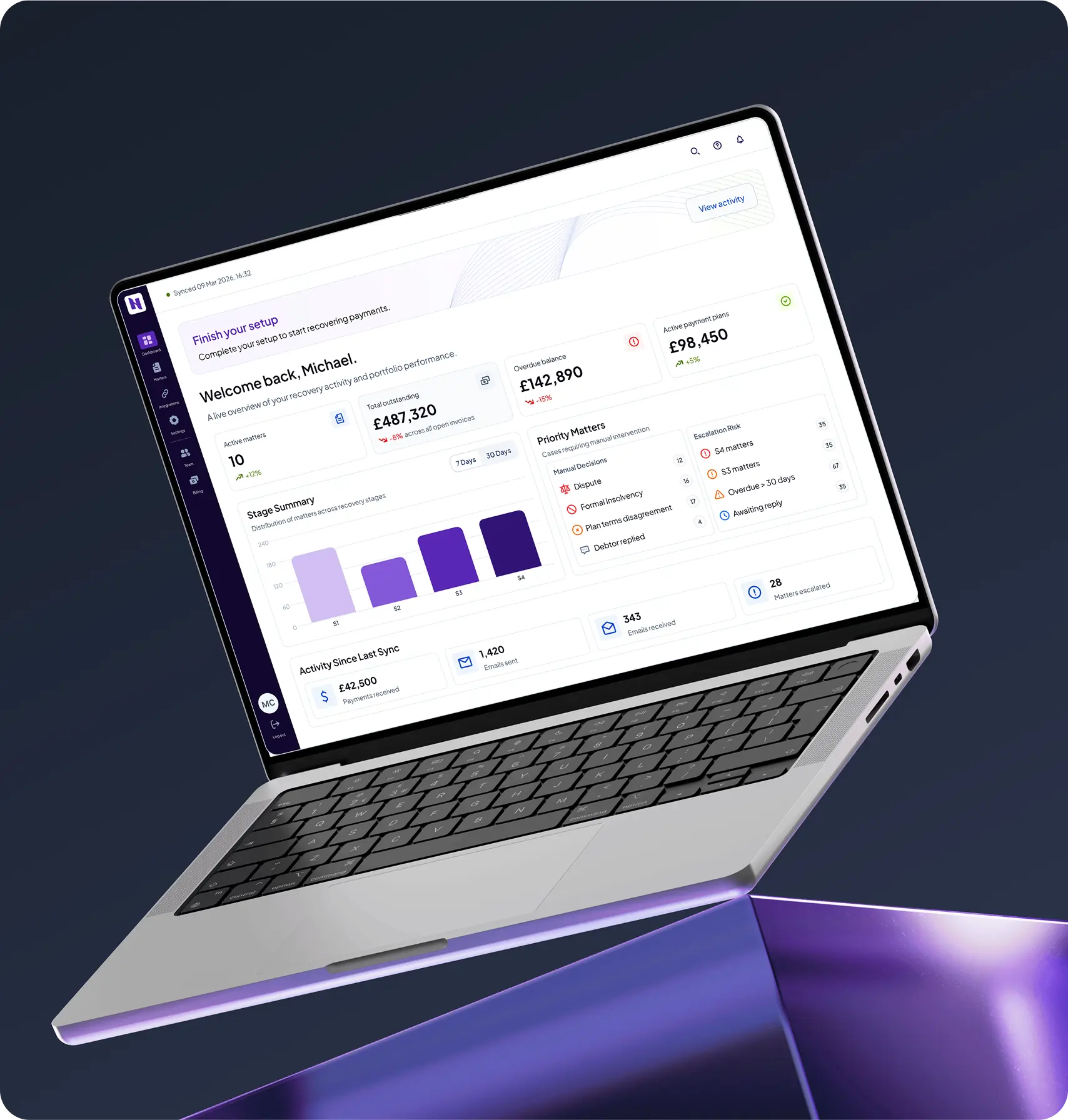


For most of the history of business, invoice chasing was a manual task. Someone sat down, looked at the outstanding invoices, decided who to chase, wrote a reminder, sent it, and logged it somewhere — or did not. The quality of the process depended entirely on the people doing it and the time they had available.
For UK SMEs, automated payment reminders are the most immediate application — but the best tools go considerably further than sending emails on a fixed schedule.
What a professional chasing process looks like — the escalation sequence, debtor reply handling, and implementation steps — is covered in detail here:

How to Chase Invoices: What a Professional Process Looks Like
A professional invoice chasing process has a defined structure. It is not a series of ad hoc emails sent whenever someone gets round to it.
Schedule-Based vs Behaviour-Based Automation
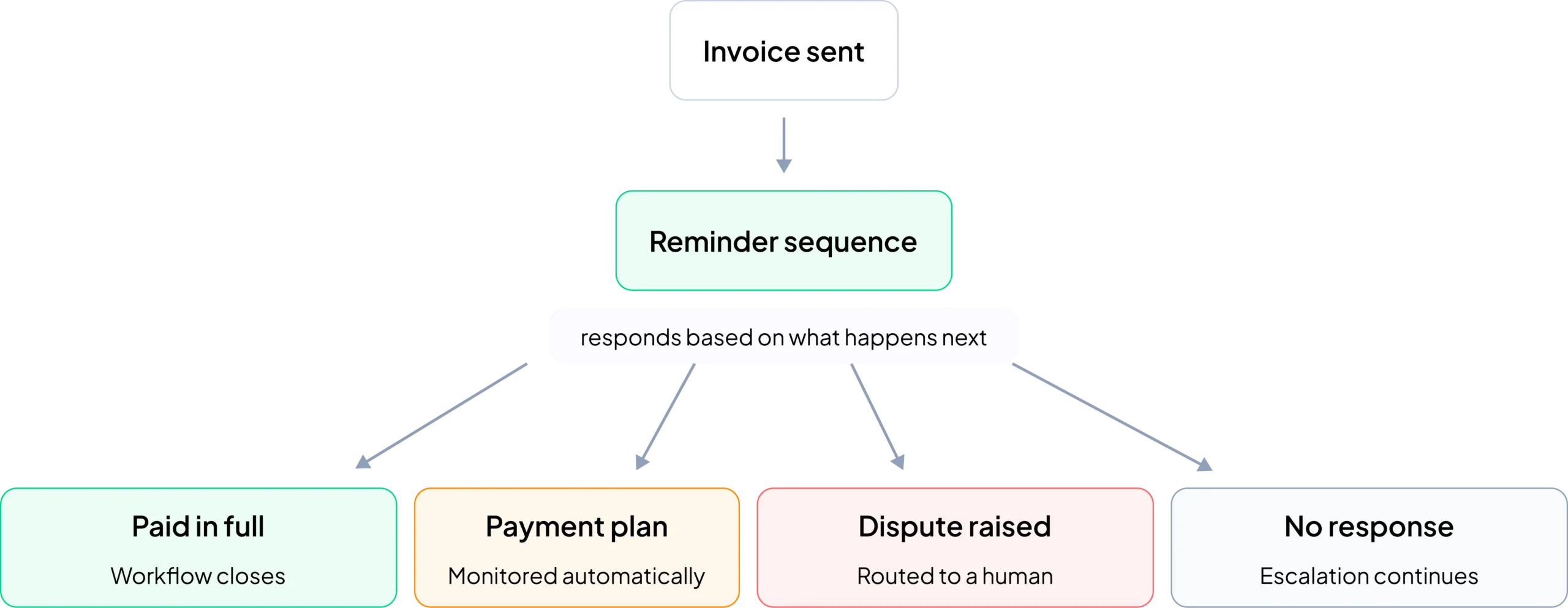
The first generation of invoice chasing software automated the sending of reminders on a fixed schedule. The user configured a sequence — send a reminder on day 3, day 10, day 17 — and the system fired emails out on those days regardless of what the debtor had done in the meantime.
This is an improvement on fully manual chasing, but it is not an intelligent process. If a debtor agrees a payment plan, the day 10 reminder goes out anyway unless someone manually intervenes. If a debtor disputes the invoice, the matter may still escalate unless someone notices and stops it. The system executes a schedule — it does not respond to reality.
Behaviour-based automation works differently. The escalation responds to what the debtor actually does. If a debtor pays in full, the workflow closes. If a debtor engages — a payment plan request, a commitment to pay, a dispute, a request for documentation — the workflow adapts. Reminders do not continue on a fixed schedule regardless of what has happened. The process responds to the debtor’s actual behaviour, not to a calendar alone.
What Can Be Automated
A well-designed automated invoice chasing process handles:
- Pre-due date reminders sent automatically before invoices fall overdue.
- Escalating overdue reminders triggered by both time and debtor behaviour.
- Payment commitments — recorded, monitored, and followed up automatically if payment does not arrive.
- Standard information requests — invoice copies and credit notes — fulfilled automatically from your accounting system.
- Debtor reply classification —every inbound response routed to the appropriate next action.
Where Humans Should Stay in Control
Automation does not mean removing humans from the process entirely. It means removing humans from the parts of the process that do not require human judgment — the routine reminders, the scheduled escalations, the standard documentation requests — so that human attention is reserved for decisions that genuinely need it.
A well-run automated chasing process involves a human when:
- A debtor raises a dispute that requires judgment.
- A payment plan breaks down and needs a conversation.
- A matter reaches the end of the escalation sequence without resolution — at which point the decision about next steps, including whether legal action is appropriate, remains entirely with the business.
This distinction matters. Automation that removes human oversight entirely creates risk. A firm final notice sent to a client who has been in direct conversation with the relationship manager about a genuine billing error is not a good outcome. Automation that keeps humans informed and involved in genuine decisions — while handling the routine automatically — is a fundamentally different proposition.
The goal is a process where the finance function owns the chasing, the client-facing team is kept informed, and the business makes the decisions that require commercial judgment. Everything in between runs itself.
What Automation is Not
It is worth being clear about what invoice chasing automation is not. It is not a debt collection agency — it automates your own internal chasing process on your behalf, communicating in your name, from your own email domain. It does not initiate legal proceedings, provide legal or financial advice, or contact debtors as a third party. It handles the communication process up to the point where a legal or commercial decision needs to be made. That decision always remains with you.
Incoming Legislation Makes the Process More Important
The Small Business Protections Bill introduces two reforms that change the commercial context materially: a 60-day cap on payment terms for large firms paying smaller suppliers, and mandatory interest at 8% above the Bank of England base rate across all commercial contracts. Businesses with a consistent, documented chasing process will be best placed to enforce these new entitlements. Those without one will find them harder to rely on in practice.
The impact of this legislation is covered in further detail here:

What SMEs Need to Know
On 24 March 2026, the UK Government published its response to the Late Payment Consultation — described as the most significant legislation to tackle late payments in over 25 years.